Humanity Systems
Support us

Building a healthy relationship between people and the technology we create

We study how we shape technology and how it shapes us, we share what we learn, and build tools to make that relationship better.

Half of American adults say they feel lonely.

We have more ways to reach each other than ever, but fewer people we can actually call. The U.S. Surgeon General found that young adults are some of the loneliest of all.

We believe technology should bring us back to each other.

Report feeling lonelyEveryone else
Each figure is one percent of U.S. adults. Source: U.S. Surgeon General’s advisory on loneliness and isolation, 2023.

Technology should serve all of us.

The technology that was supposed to bring us together has left us more divided and more alone. Much of it was built to make money by keeping our attention, and we rarely share in what it earns. Over time, that has changed how we treat each other. Now AI is learning from all of it.

We share these concerns, and we’ve made them our responsibility.

Our job is to help build technology that works for all of us. That means helping us talk to each other and stay close, making sure our voices are heard, getting us a fair share of what we create, helping our communities take care of themselves, and being a better example for AI.

Our flagship program · In development

AI Behavior Benchmark

Some of the biggest decisions in our lives now pass through AI. Whether a medical claim gets paid. Whether a loan gets approved. Whether a job application gets read. We test how the 20 most widely used AI models behave in three areas where mistakes hurt people most: healthcare, finance, and hiring. A fixed rule we publish decides which models we test. Independent reviewers approve our results before we publish them. Then we share them free, so all of us can judge for ourselves.

These risks aren’t hypothetical. Here’s what’s already in the news.

Healthcare

Insurance claim denials

A lawsuit says UnitedHealth used an AI tool called nH Predict to cut off nursing care for elderly Medicare Advantage patients, overriding their own doctors. The families say more than 90% of the denials that were appealed got reversed. UnitedHealth denies the claims, and the case is ongoing.

Source: DLA Piper on Estate of Lokken v. UnitedHealth Group

Finance

Loan decisions

Massachusetts said student lender Earnest used AI models that put Black and Hispanic applicants at a disadvantage, and automatically turned down some applicants who weren’t citizens. In 2025, Earnest agreed to pay $2.5 million to settle the case.

Source: DLA Piper on the Massachusetts settlement with Earnest

Hiring & HR

Job applicant screening

Derek Mobley says he was turned down for more than 100 jobs at companies using Workday’s AI screening tools. His lawsuit claims those tools screen out older, Black, and disabled applicants. A federal court let it go forward as a nationwide case. Workday denies the claims.

Source: HR Dive on Mobley v. Workday

These cases involve AI tools built by the companies named, not the AI models we test. They show what’s at stake when AI makes decisions about people.

Built from real life

Good tests start with real moments. We pay the people who live those moments every day to write them down: nurses, home-care aides, social workers, fraud investigators, claims and customer-service leads, safety engineers, and clinicians. They know where judgment matters most.

Every situation they write asks how AI handles a moment that matters:

  • Does it know when to ask a person for help?
  • What does it do after it makes a mistake?
  • When does it say no?
  • Does it stay within the job it was given?

We share a free library of these situations, so anyone building or studying AI can use them. We keep some situations private, so no one can practice for the test.

Your donation pays the nurses, caregivers, and investigators who write the real situations our tests are built on.

What we’re building

Technology learns from us. Let’s give it something worth learning.

Each program is one part of being a better example: how we hold AI to account, how we understand what’s happening, how we talk and decide together, how we share value fairly, and how we take care of each other. Pick the one that matters most to you, and your donation goes to that work.

The problem

Most of us use AI every day without any independent, public record of how it behaves.

Our solution

AI Behavior Benchmark

How we hold AI to account

We believe all of us deserve to know how the AI tools we use every day actually behave.

What we’re building: A free public record of how the 20 most widely used AI models behave in healthcare, finance, and hiring.

The problem

AI is changing our lives and it’s difficult to keep up.

Our solution

Education for the public and policymakers

How we understand what’s happening

We believe everyone, including the people writing the rules, deserves an honest, simple explanation of AI, without the hype or the fear.

What we’re building: Plain-language guides and an explainer series for the public, and briefings for the lawmakers writing the rules on AI.

The problem

Social media taught us to fight, and our voices rarely reach the people who decide.

Our solution

Better Public Square

How we talk and decide together

We believe that most conflicts are misunderstandings and could be avoided if our intentions were understood. And when we do agree, we need a way to turn that shared view into something actionable.

What we’re building: Two free tools: one that helps us understand what someone meant before we react, and one that turns what a community agrees on into a clear message officials have to answer.

The problem

Our communities lack resilience and self-sufficiency.

Our solution

Community markets

How we take care of each other

We believe every community already holds much of what it needs, and neighbors should be able to share it more efficiently.

What we’re building: Local markets where neighbors trade food, goods, and services, even when money is tight.

We want a future where

human connection is strong, communities can provide for one another, value flows to those of us who create it, and AI is a trusted partner with humanity.

Why this can’t wait

Human alignment is AI alignment.

In the AI world, “alignment” means getting AI to act on human values. We think that starts with how we treat each other.

AI is one part of our work. It already helps decide who gets hired, who gets a loan, and who gets seen by a doctor. And it learns how to make those choices from the way we’ve treated each other in the past.

In 2018, Reuters reported that Amazon had dropped an experimental hiring tool because it scored résumés lower when they included the word “women’s.” The tool learned that from ten years of past résumés, most of them from men.

That’s also why we test how the 20 most widely used AI models behave in healthcare, finance, and hiring and HR, and publish the results free for everyone. Learn about the AI Behavior Benchmark

So healthier relationships between people and better AI are the same work. When we learn to understand each other, speak up together, and share fairly, we become a better example for AI.
How we do our work

Research

We look closely at how technology changes the way we live and relate to each other. Everything we find is free for anyone to read, use, or pick apart.

Education

We explain what technology is doing to our lives in plain words, for all of us and for the people who make the rules.

Tools and programs

We build what’s missing and publish it openly, so it belongs to all of us.

Where we are

  • September 2026: incorporated as a California nonprofit.
  • AI Behavior Benchmark: testing method close to its first prototype.
  • Education: outreach to policymakers started.
  • Better Public Square: prototyping started.

Who we are

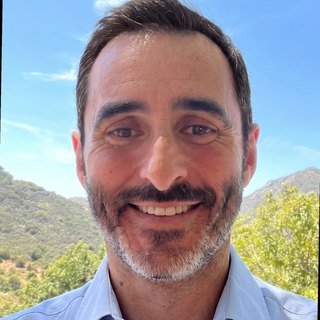
Adam Tucker

Adam Tucker

Co-founder, CEO

I’m a father and husband, and I believe we all have something unique to contribute to the world and it’s our responsibility to put our good where it can do its best. I started Humanity Systems out of a desire for unity, and a concern that people are being shut out of the decisions that shape their lives. AI will learn from whatever version of us we give it, so I believe aligning with each other is the path to aligning AI with us. I’d call myself a realist with idealistic expectations. I also co-founded AVAAS, an independent company that sets a standard for how AI agents behave.

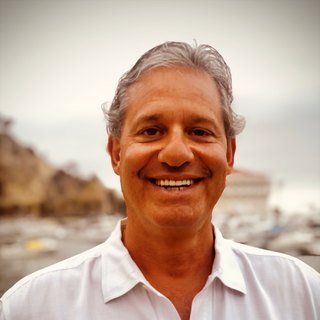
David Satossky

David Satossky

Co-founder, Chief Business Officer

I’ve built and led businesses across technology, finance, real estate, and emerging industries, always drawn to where innovation meets human behavior. As technology changes how we work, communicate, and learn, I think the most important question is what kind of future we want it to help create. I believe every person has inherent value and something meaningful to contribute, and I want technology to amplify that. I also co-founded AVAAS, an independent company that sets a standard for how AI agents behave.

Matthew Leebert

Matthew Leebert

Co-founder, CTO

I’m a builder at heart, focused on designing architecture that can handle complex integrations, scale efficiently, and remain highly reliable. My priority is building AI infrastructure that works transparently and predictably in the real world. I also co-founded AVAAS, an independent company that sets actionable standards for AI behavior.

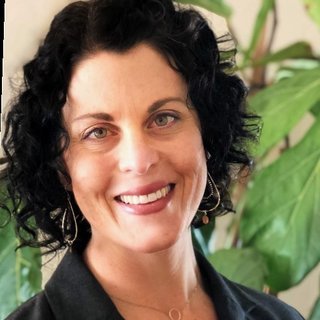
Kerri Berkowitz

Kerri Berkowitz

Advisor

I’ve spent my career helping schools become places where people feel heard. I started as a school social worker. Then I led the restorative practices program for San Francisco’s public schools, where suspensions dropped by more than half. In 2014 I founded the Center for Relational Practices, and I now train schools and districts across the country. I’ve seen that when people have a real way to listen to each other, most harm can be repaired.

Lio Spiegler

Lio Spiegler

Advisor

I help leaders find what stops a good idea from turning into action. I spent more than twenty years in brand strategy, film, and creative direction. Today I advise CEOs through growth, market entry, and change. Often the gap that looks like a process problem is really a human one. I believe AI should take on the mechanical work and leave people the conversations only people can have.

What we get right now will outlast all of us.

This affects every one of us, and you can help. Your support decides what moves forward. Choose the part of our work you want to fund, and your donation goes straight to it.

Humanity Systems is a California nonprofit. Our application for federal tax-exempt status is pending, so donations aren’t tax deductible yet. If our application is approved, past donations may become deductible. Donation policy.

Amount

Even a small donation helps.

How often

Your support goes to work right away.

If an idea can’t move forward as planned, we’ll put your donation toward the closest related work.

Our purpose, as filed

Educate the public and policymakers on the relationship between human wellbeing and advanced technology, including artificial intelligence; conduct research and develop tools, standards, and programs that align such technology with human wellbeing and strengthen community resilience.

The specific purpose stated in our articles of incorporation, California Secretary of State, September 2026.